
01-15-2026
Loud budgeting is a money trend where people openly and unapologetically talk about their financial boundaries, especially when saying no to spending.
Instead of quietly skipping plans or feeling awkward about money decisions, loud budgeters say things like:
The goal is to remove shame around money, normalize financial boundaries, and push back against pressure to overspend.
This trend gained traction on social media as people grew tired of “quiet luxury,” lifestyle inflation, and pretending to afford things that don’t actually fit their lives.
Why Is Loud Budgeting Trending Right Now?
This trend didn’t come out of nowhere. It’s a response to several real financial pressures:
People are searching for permission to spend differently and this “strategy” gives them language to do it.
This is why searches like “what is loud budgeting” and “is loud budgeting good or bad” are spiking right now.
Does Loud Budgeting Actually Work?
Sometimes! It can be helpful if it’s supported by a real financial plan. On its own, it often falls apart.
When Loud Budgeting Works
It can be effective when it helps you:
For people who’ve never talked openly about money, this can be empowering.
When Loud Budgeting Fails
It tends to fail when:
In other words, being loud about money doesn’t automatically make you good with money.
Is Loud Budgeting Just Being Cheap?
No, but it can look that way if it’s misunderstood.
This strategy isn’t about spending the least amount possible. It’s about spending intentionally and being honest about tradeoffs.
However, without clarity, it can easily turn into reactive decisions, over-restriction, or confusion masked as confidence.
True financial confidence doesn’t come from announcing boundaries, it comes from knowing why those boundaries exist.
Is Loud Budgeting Good for High-Income Earners?
This is where the conversation gets interesting.
Many high-income earners struggle with money not because they don’t earn enough, but because they don’t have a system guiding their decisions. There could also added pressure in these social circles to “keep up with the Joneses.”
For them, loud budgeting can help reset social expectations, reduce lifestyle creep, and normalize intentional choices. But it often doesn’t go far enough.
High-income families usually don’t need louder boundaries, they need better cash flow visibility, clear priorities, and a plan that balances today and the future.
Saying “no” is useful, but knowing what you’re saying yes to instead is far more powerful.
The problem? Both miss the mark if they don’t reflect real life.
A modern money system should:
A Smarter Alternative
Here’s the truth most trends won’t tell you:
You don’t need to announce every spending decision.
You need a plan that already made the decision for you.
When your money has a clear purpose:
At Verde, we see the most success when people move beyond trends and into simple, repeatable systems that reflect how they actually live.
Frequently Asked Questions About Loud Budgeting
Isn’t this the same as regular budgeting?
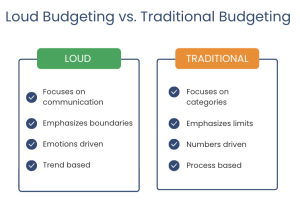
No. Loud budgeting focuses on communication and mindset, while budgeting focuses on structure. They work best when combined, not when one replaces the other.
Do I need to tell people my financial boundaries?
Only if it helps you. Financial clarity should reduce stress, not create performative pressure.
Can this strategy help me save money?
It can help short-term behavior, but long-term progress usually requires a clear cash flow system and defined goals.
Is this just another trend?
Yes, but it highlights a real need: people want permission to make intentional financial choices without shame.
Loud budgeting isn’t bad, it just seems to be incomplete.
It opens the door to better conversations about money, but it doesn’t replace clarity, planning, or systems. If the trend helps you stop overspending and start asking better questions, that’s a win.
Just don’t confuse being loud about money with being intentional about it.
If you’re ready to move beyond trends and build a plan that supports the life you actually want, that’s where real financial confidence begins.

Loud budgeting is a money trend where people openly and unapologetically talk about their financial ....
Read MoreTogether we get better results than we could on our own